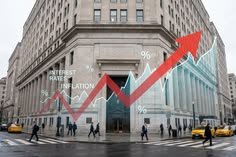
The Federal Reserve raised its benchmark interest rate by 0.25 percentage point on September 16, 2026, marking its first rate increase since 2023. The target range is now 3.75% to 4.00%, and that change can affect both sides of your personal finances: the interest you earn on savings and the interest you pay on credit-card balances. Federal Reserve+1
As of October 7, 2026, the Fed has not yet made another rate decision. Its next scheduled meeting is October 27–28, so additional changes remain possible depending on inflation, employment and other economic data. NNerdWallet+1
Here is what the September rate hike means for American savers and credit-card users.
What Did the Fed Do in September 2026?
The September decision increased the federal funds target range by one-quarter of a percentage point. The move was approved unanimously, with the Fed saying inflation remained elevated and that the action would support a more timely return toward its 2% inflation goal. Federal Reserve
The federal funds rate is the interest rate banks charge one another for overnight borrowing. Consumers do not directly pay or receive the federal funds rate, but it influences other interest rates throughout the economy.
As of October 5, the effective federal funds rate was 3.88%, while the prime rate was 7.00%. FFederal Reserve
Why the Fed Raises Interest Rates
The Fed generally raises rates when it wants to put downward pressure on inflation.
Higher borrowing costs can discourage consumers and businesses from taking on new debt and can reduce spending. At the same time, higher interest rates can make saving more attractive.
The effect is not immediate or identical for everyone. Banks and credit-card issuers set their own rates, and different financial products respond to Fed changes at different speeds.
How the 2026 Fed Rate Hike Affects Savings Accounts
A Fed rate increase can be good news for savers, particularly people who keep money in competitive high-yield savings accounts.
Savings accounts generally have variable interest rates. When market interest rates rise, banks may increase the APY they offer to attract deposits.
However, a 0.25 percentage-point Fed increase does not mean every savings account will automatically increase by 0.25 percentage point.
High-Yield Savings Accounts May Benefit
Competitive online savings accounts tend to respond more closely to changes in the broader interest-rate environment.
Recent data illustrates the difference between ordinary savings accounts and high-yield accounts. Bankrate reported a national average savings yield of 0.66% APY as of October 6, 2026, while the best high-yield savings accounts were paying around 4%. BBankrate
NerdWallet reported that the national average savings rate was about 0.37% in early October and that many competitive accounts had increased their rates following the September Fed hike. NNerdWallet
The important point is that the Fed’s rate is not the same thing as your savings APY.
Your bank may:
- Raise your APY by the full amount.
- Raise it by less than 0.25 percentage point.
- Raise it later.
- Leave the rate unchanged.
- Change the rate again if market conditions change.
How Much More Could You Earn?
Suppose you have $10,000 in a savings account.
If your bank increased the APY from 4.00% to 4.25%, the difference would be roughly:
| Balance | 4.00% APY | 4.25% APY | Approx. additional interest |
|---|---|---|---|
| $5,000 | $200 | $212.50 | $12.50 |
| $10,000 | $400 | $425 | $25 |
| $25,000 | $1,000 | $1,062.50 | $62.50 |
| $50,000 | $2,000 | $2,125 | $125 |
These are simplified illustrations and assume the stated APY remains unchanged for a full year. Actual interest can vary based on compounding, deposits, withdrawals and changes to the account’s rate.
What About Traditional Bank Savings Accounts?
The Fed’s rate hike does not guarantee that large brick-and-mortar banks will raise their standard savings rates.
In fact, the gap between traditional savings accounts and competitive online accounts can be substantial. Bankrate notes that online banks can often offer higher yields because they generally have lower overhead and compete aggressively for deposits. BBankrate
This means a Fed rate hike can be an opportunity to check what your current bank is paying.
If your savings account earns very little interest, compare its APY with other FDIC-insured options before deciding whether moving money makes sense for you.
How the Fed Rate Hike Affects Credit Cards
Credit-card users can experience the opposite effect from savers.
Most credit cards have variable APRs, and many are linked to the prime rate. Bankrate reports that credit-card pricing commonly uses the prime rate plus an issuer-set margin. BBankrate
Because the prime rate is closely connected to the federal funds rate, a Fed hike can push credit-card APRs higher.
The September 2026 Fed move lifted the target federal funds rate by 0.25 percentage point, and the prime rate was 7.00% in early October. FFederal Reserve+1
Credit-Card APRs Are Already High
According to Bankrate, the average credit-card interest rate was 19.63% on September 30, 2026. BBankrate
The Federal Reserve’s latest available consumer-credit release showed an average rate of 21.52% on credit-card accounts assessed interest in July 2026. That measure is different from Bankrate’s weekly market average, so the figures should not be treated as interchangeable. FFederal Reserve
For consumers who carry a balance from month to month, even a small increase in APR can add to borrowing costs.
How Much Can a 0.25% Increase Cost You?
Consider a hypothetical $5,000 credit-card balance.
A 0.25 percentage-point increase represents approximately:
$5,000 × 0.25% = $12.50 per year
That is a simplified calculation and does not represent the exact interest charge on a credit-card statement because credit-card interest is generally calculated using a daily periodic rate and the balance can change.
The bigger issue is the underlying APR. A balance of $5,000 at a high variable APR can generate hundreds of dollars in annual interest even before another Fed increase.
For someone carrying significant credit-card debt, paying down the principal can therefore matter much more than a small change in the Fed’s benchmark rate.
What Should You Do With Your Savings?
A higher-rate environment gives savers several things to consider.
Check Your Current APY
Look at your latest bank statement or online account information and find the actual APY you’re receiving.
Do not assume that your bank increased your rate simply because the Fed raised rates.
Compare High-Yield Savings Accounts
If your current APY is substantially below competitive high-yield savings rates, comparison shopping may make sense.
As of early October 2026, competitive high-yield savings accounts were offering rates around 4%, although rates can change and some accounts have balance, direct-deposit or other requirements. Bankrate+1
Before opening an account, check:
| Balance | 4.00% APY | 4.25% APY | Approx. additional interest |
|---|---|---|---|
| $5,000 | $200 | $212.50 | $12.50 |
| $10,000 | $400 | $425 | $25 |
| $25,000 | $1,000 | $1,062.50 | $62.50 |
| $50,000 | $2,000 | $2,125 | $125 |
These are simplified illustrations and assume the stated APY remains unchanged for a full year. Actual interest can vary based on compounding, deposits, withdrawals and changes to the account’s rate.
What About Traditional Bank Savings Accounts?
This means a Fed rate hike can be an opportunity to check what your current bank is paying.
How the Fed Rate Hike Affects Credit Cards
Because the prime rate is closely connected to the federal funds rate, a Fed hike can push savings account balance beside a credit card, subtle financial documents, a calculator, and a laptop on a clean desk. In the background, include a sophisticated, softly blurred Federal Reserve-inspired financial district atmosphere without showing any recognizable logos or copyrighted branding. Use natural daylight, premium blue and neutral tones, realistic materials, cinematic depth of field, polished business-journalism photography credit-card APRs higher.
Credit-Card APRs Are Already High
What Should You Do With Your Savings?
- APY and whether it is variable
- Minimum opening deposit
- Minimum balance requirements
- Monthly maintenance fees
- Withdrawal or transfer rules
- Whether the institution is FDIC-insured
FDIC insurance generally covers eligible deposits up to $250,000 per depositor, per insured bank, per ownership category. NNerdWallet
Consider CDs for Money You Do Not Need Soon
Certificates of deposit can offer fixed rates for a specific term.
Unlike a typical savings account, a CD generally locks in its rate, so an existing CD does not automatically become more valuable when the Fed raises rates. New CD offers, however, can reflect changing market conditions.
If you are considering a CD, compare the guaranteed APY with the term and early-withdrawal penalty before committing your money.
What Should You Do About Credit-Card Debt?
A Fed rate hike is a reminder to pay attention to variable-rate debt.
Pay More Than the Minimum When Possible
Making only the minimum payment can keep a balance outstanding for a long time, especially when the APR is high.
Even additional payments can reduce the principal on which future interest is calculated.
Consider a Lower-Rate Alternative
Depending on your circumstances and eligibility, alternatives may include:
- A lower-APR credit card
- A balance-transfer card
- A personal loan
- A credit-union loan
- A structured debt-repayment plan
Each option has different fees, eligibility requirements and risks. A balance-transfer card, for example, may charge a transfer fee and eventually revert to a higher APR after an introductory period.
Avoid Treating a Rate Cut or Hike as a Debt Strategy
The Fed can change rates again, but consumers should not rely on future rate movements to solve a credit-card balance.
Credit-card debt is generally expensive enough that reducing the balance itself can have a much more direct effect on interest costs.
Savings Accounts vs. Credit Cards: The Same Fed Move Has Opposite Effects
The easiest way to understand the September 2026 rate hike is to look at which side of the balance sheet you’re on.
| Financial product | Potential effect of higher Fed rates |
|---|---|
| High-yield savings | Rates may increase |
| Traditional savings | May increase, but not necessarily |
| Money market accounts | Rates may increase |
| New CDs | New offers may become more attractive |
| Existing fixed-rate CDs | Usually unaffected |
| Variable-rate credit cards | APRs may increase |
| HELOCs | Rates may increase |
| Fixed-rate loans | Existing rate generally unchanged |
The exact effect depends on the financial institution, the product and the terms of your account or loan.
Could the Fed Raise Rates Again in 2026?
Another rate hike is possible, but it is not guaranteed.
The Fed’s next scheduled policy meeting is October 27–28, 2026. Officials have indicated that future decisions will depend on economic data and the evolving outlook. NNerdWallet+1
Reuters reported on October 2 that markets had reduced expectations for an October hike following weaker employment data, although inflation data and other developments could change the outlook. Reuters
That uncertainty matters for consumers because savings yields and variable borrowing rates can change again if the Fed changes policy.
Rather than trying to predict the next Fed decision, consumers can focus on the rates they are actually receiving and paying today.
What the 2026 Fed Rate Hike Means for Your Money
The September 2026 rate increase creates a mixed picture for household finances.
For savers: higher rates can provide an opportunity to earn more interest, particularly through competitive high-yield savings accounts and other interest-bearing products.
For credit-card users: higher rates can increase the cost of carrying a balance on variable-rate cards.
For everyone: the Fed’s benchmark rate is only one factor. Banks set deposit rates, card issuers determine APR margins, and financial institutions can adjust their products at different speeds.
The most useful response is therefore practical: check your savings APY, review your credit-card APR, compare available options and understand whether your rates are fixed or variable.
This article provides general financial information, not personalized financial advice. If you are dealing with substantial debt, large deposits, tax considerations or complex financial circumstances, consider speaking with a qualified financial professional who can evaluate your individual situation.
SEO TITLE:
2026 Fed Rate Hike: What It Means for Savings Accounts and Credit Cards
META DESCRIPTION:
Learn what the 2026 Fed rate hike means for savings accounts, high-yield savings rates, credit-card APRs and household finances.
URL SLUG:
2026-fed-rate-hike-savings-accounts-credit-cards
FOCUS KEYWORD:
2026 Fed rate hike
RELATED KEYWORDS:
- Federal Reserve interest rates 2026
- Fed rate hike September 2026
- savings account rates 2026
- high-yield savings account rates
- credit card APR 2026
- credit card interest rates
- federal funds rate
- prime rate 2026
- how Fed rate hikes affect savings
- how Fed rate hikes affect credit cards
- best savings rates
- variable credit card APR
INTERNAL LINK IDEAS:
- Best high-yield savings accounts
- How credit card interest is calculated
- How to pay off credit card debt faster
- Savings account vs. CD: Which is better?
- How the Federal Reserve affects interest rates
FAQ:
Does the Fed rate hike increase savings account rates?
It can. Savings accounts generally have variable rates, so banks may increase APYs when market interest rates rise. However, banks do not have to pass along the full Fed increase.
Will credit-card APRs increase after a Fed rate hike?
Many variable-rate credit cards can become more expensive after a Fed increase because their APRs are often linked to the prime rate. The timing and size of the adjustment depend on the card issuer and account terms.
What is the Fed’s interest rate as of October 2026?
As of October 7, 2026, the Federal Reserve’s target range for the federal funds rate is 3.75% to 4.00%. The Fed last changed the range on September 16, 2026. FFederal Reserve
When is the next Fed rate decision?
The Federal Open Market Committee’s next scheduled meeting is October 27–28, 2026. NNerdWallet
Should I move my savings after a Fed rate hike?
A rate hike can be a good reason to review your savings APY and compare competing accounts, but whether moving money makes sense depends on factors such as fees, account requirements, access to funds and FDIC insurance coverage.
Does a Fed rate hike affect existing fixed-rate loans?
Generally, an existing fixed-rate loan does not change simply because the Fed raises its benchmark rate. Variable-rate loans and credit products can respond differently.